Civics and government are essential parts of social studies—but they can sometimes get reduced to memorizing the branches of government, a few constitutional facts, or election trivia. Or they’re covered once in school and not revisited.
But having a strong civics component in your homeschool social studies curriculum helps your child really understand how government works, what rights and responsibilities they have, and how they can be more active participants in their community.
And all this also strengthens critical-thinking skills, media literacy, and confidence in discussing and participating in real-world issues.
That’s why it’s important not only to discuss government topics as part of a history course, but also to use a dedicated civics curriculum throughout your child’s homeschool journey.
In this post, I’ll break down what a solid civics and government education includes and how to build civics skills from elementary through high school.
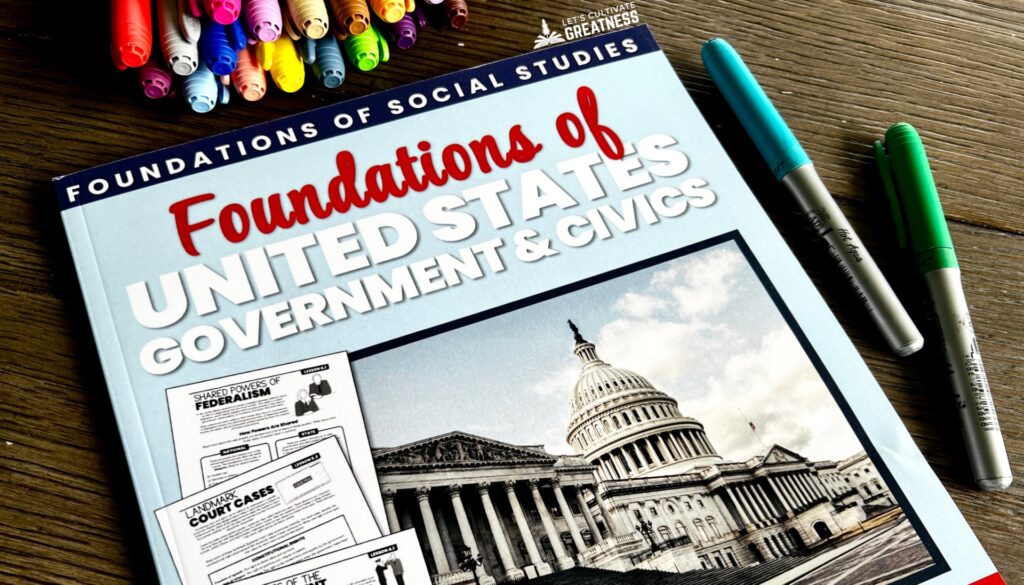
I will also preview my Foundations of United States Government & Civics curriculum workbook, which I created to help middle school students develop those skills in a clear and easy way.
What all is included in learning Civics & Government?
At its core, civics is the study of how governments function—and how citizens participate in them.
That means civics includes learning about the branches of government, elections, and the Constitution, but it’s also about citizenship, rights and responsibilities, and civic participation. Here are the core topics that should be covered:
Government structure includes understanding how local, state, and federal governments work, how laws are made, and how power is divided and balanced.
Citizenship and civic participation focus on the role citizens play in society: voting, staying informed, participating in communities, and understanding both rights and responsibilities.
Media literacy and public policy help students find trustworthy sources and think critically about news, political messaging, current events, and how government decisions affect everyday life.
Ultimately, civics is about understanding power, responsibility, and decision-making in society.
A strong civics curriculum will help your child explore questions like: Why do laws exist? How does the Constitution limit government power? How do citizens influence government decisions? How does media shape public opinion? Why do rights and responsibilities need to balance each other?
These are the kinds of questions that civics helps students think through—and they’re exactly what make civics and government such important parts of social studies.
Building Civics & Government Skills From Elementary Through High School
Civics skills are best built over time, with each stage preparing students for more complex thinking and participation later on.
Like other social studies disciplines, civics and government should be revisited throughout the years to both reinforce foundational concepts and dive into deeper current issues and discussions.
In the early elementary years, civics begins with simple ideas about rules, fairness, leadership, and community.Students learn about community helpers, basic citizenship, and why societies create rules and responsibilities.
Upper elementary is a perfect time to introduce basic government concepts like the three branches of government, the structure of local, state, and federal government, voting, and citizenship.
Middle school learners are ready to think more deeply about rights, responsibilities, and the government’s role.That’s why middle school civics curriculum often focuses on constitutional principles, rights and liberties, civic participation, media literacy, and current events.
In high school, civics becomes even more analytical, focusing on arguments surrounding Supreme Court cases, political ideologies, comparative governments, and complex current issues. Civics becomes a tool for understanding how societies function and how citizens influence them.
When civics is taught in this progressive way, students develop far more than memorization skills. They learn to think critically, evaluate information, discuss issues thoughtfully, and better understand their role as informed citizens.
A Civics & Government Curriculum Designed for Middle School
If your child is in middle school and you’re looking for a homeschool civics curriculum that builds strong government understanding and critical-thinking skills (or is in high school and needs a quick refresher), check out my Foundations of United States Government & Civics workbook.
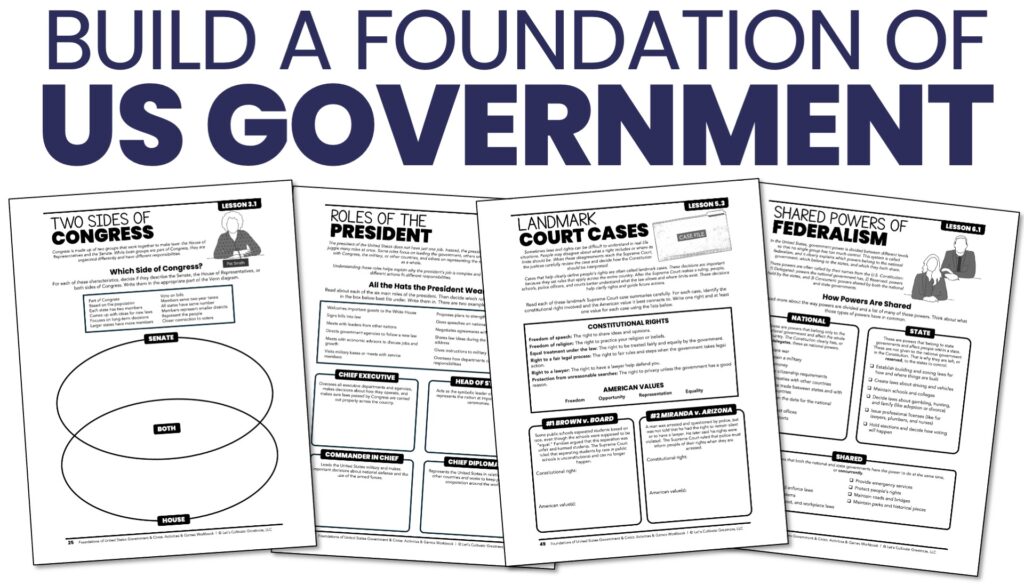
This workbook is designed to teach not only how the U.S. government is structured, but also why governments exist, how citizens participate, and how government decisions affect everyday life.
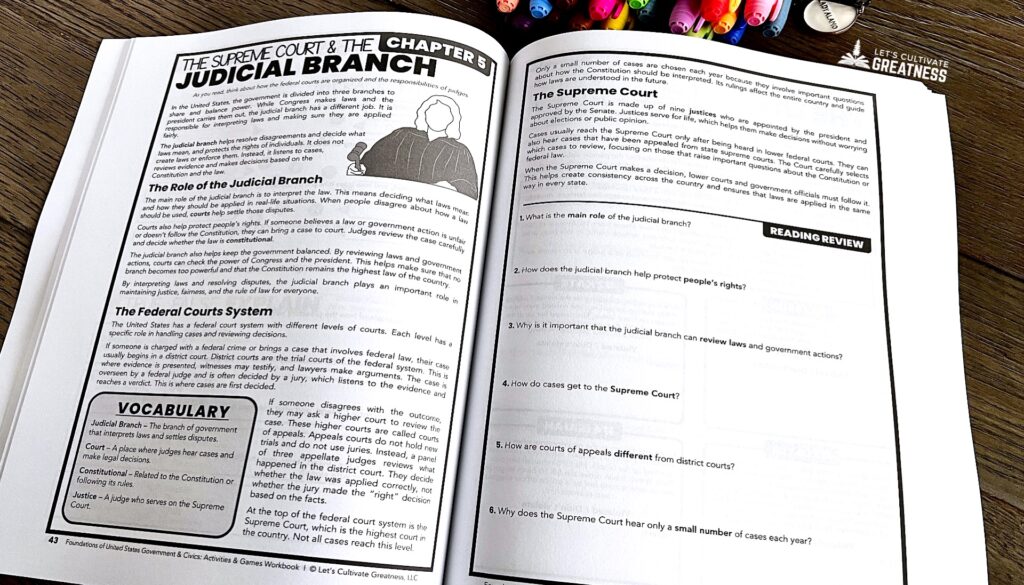
It’s organized into seven chapters, each with a short informational reading followed by guided activities ranging from researching current elected officials to analyzing landmark court cases, critical-thinking questions, review games, and an end-of-chapter test.
Topics covered include: why societies create governments; the structure of the United States government; the legislative, executive, and judicial branches; state and local government; citizenship and civic participation; and important national symbols and traditions.
The activities break complex government concepts into manageable lessons for increasingly independent middle school learners. It also works well for any high schooler who needs a quick review of the essentials.
Whether you use it on its own or alongside a U.S. history curriculum, it’s designed to be flexible, open-and-go, and easy to adapt to different homeschool approaches.
To take a closer look inside the workbook, check out my flip-through video below.