Has your family ever watched Planet Earth together and your kids were mesmerized by places that seemed unreal? Underground turquoise pools. Waterfalls that seem to pour right out of the clouds. Green lights dancing across the Arctic sky.
Our planet really is full of some pretty jaw-dropping places.
That feeling of awe is where great learning starts. Kids see something intriguing, and the questions follow:
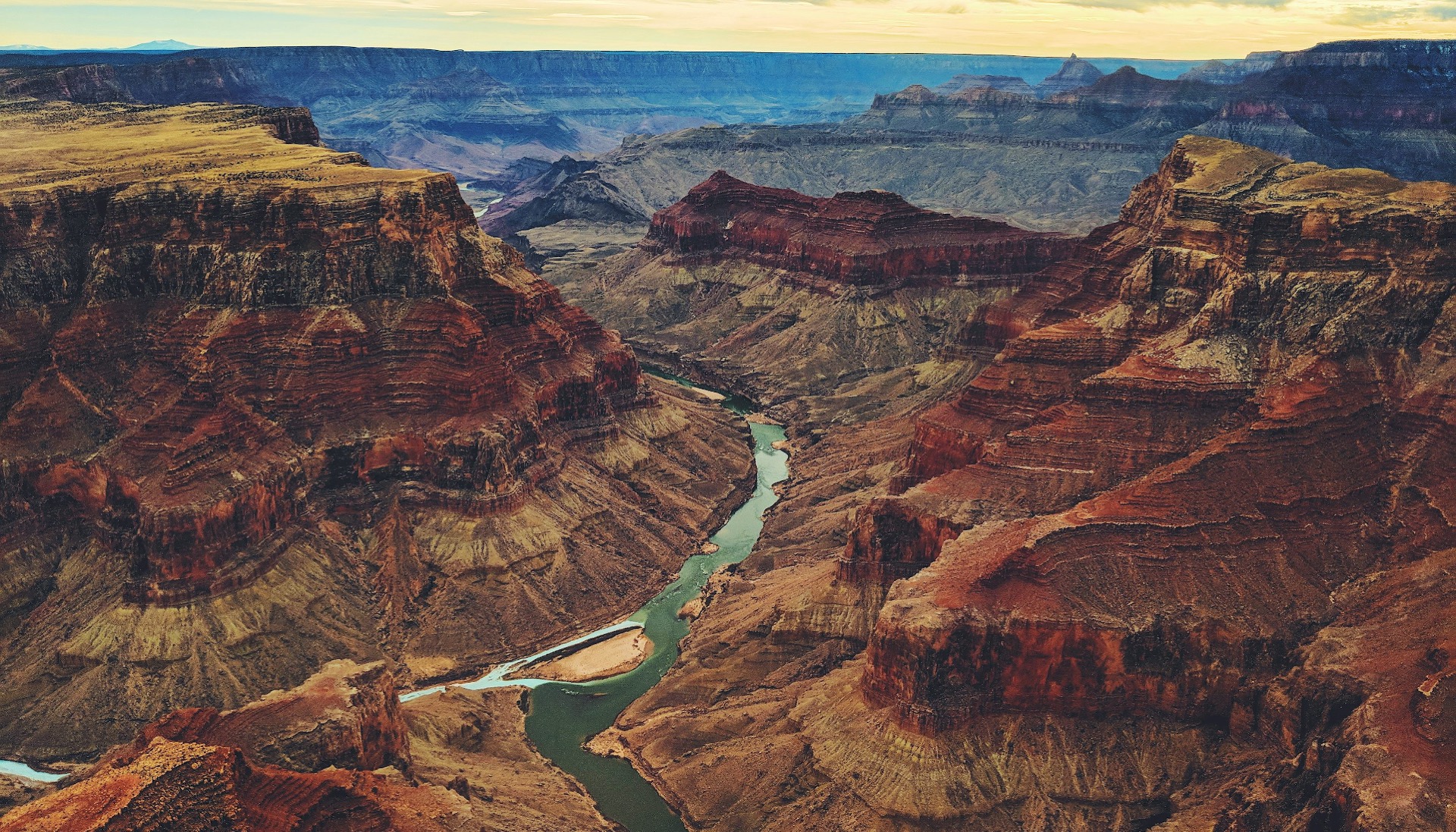
How did the Grand Canyon get so deep?
What makes the Northern Lights glow green?
How did tiny living animals build the Great Barrier Reef?
Every one of those questions is earth science, geography, and history all at once.
Why Teach Earth Science and Geography Together?
Because in the real world, they’re connected! The forces that build mountains and carve canyons also shape where people live, how animals survive, and what artists choose to paint.
In high school, subjects usually split into separate courses. That makes middle school a wonderful time for more connected, interest-based learning, where one amazing place can lead to science, history, and art in the same week.
How Can a Natural Wonder Become a Unit Study?
Homeschooling with unit studies is a great way to move beyond rigid classroom subjects and better follow your child’s interests. They also work well for family-style learning with multiple children.
Basically, you take one topic and branch out from it. You pull together a variety of sources and subjects like a documentary, a novel, math practice, a science lesson, or an art project all related to that topic. Instead of teaching subjects in isolation, a unit study connects all the lessons back to the central topic.
Any natural wonder makes a fantastic unit study topic.
Here’s what one or two weeks on Yellowstone could look like:
- Earth science: Watching a documentary on how geothermal energy powers Old Faithful and the other geysers.
- Biology: Reading a news article about how bringing wolves back in the 1990s changed Yellowstone’s food web and drawing a diagram of it.
- History and art: Examining famous paintings and photographs from an 1871 expedition that influenced Congress to make Yellowstone the world’s first national park.
- Civics: Researching how the park balances protecting nature with allowing recreation.
That’s a whole lot of learning, and it all ties together meaningfully.
What Are the Natural Wonders of the World?
There’s no single official list. The best-known is the Seven Natural Wonders of the World, which includes the Grand Canyon, the Great Barrier Reef, Mount Everest, and the Northern Lights. In 2011, a worldwide public vote named the New 7 Wonders of Nature, including the Amazon rainforest.
These lists are a fun place to start, but plenty more places are worth exploring, like Yellowstone, the Galápagos Islands, and the Mariana Trench.
How Do You Set Up a Unit Study on a Natural Wonder?
This is just a suggested routine, so adjust it to fit your kids. If they’re older, let them choose the books, movies, and projects.
Spend a day or two learning about the wonder itself:
Find it on a map, then explore photos and satellite images on Google Earth.
Read about how it formed and learn key vocabulary, like erosion or plate tectonics.
Ask: How and why did this wonder happen here?
Then branch out for the rest of the week. Pick one or two ideas that fit your family:
Watch a documentary about the wonder or the animals that live there.
Try an art project inspired by the area’s culture.
Talk through a real-world problem, like how many climbers should be allowed on Mount Everest each year.
Plan a pretend trip. How would you get there, and what would you pack?
Easy pairing tip: match wonders to what you’re already studying. Pair Mount Fuji with Japan in your world geography course, or the Grand Canyon with erosion in science.
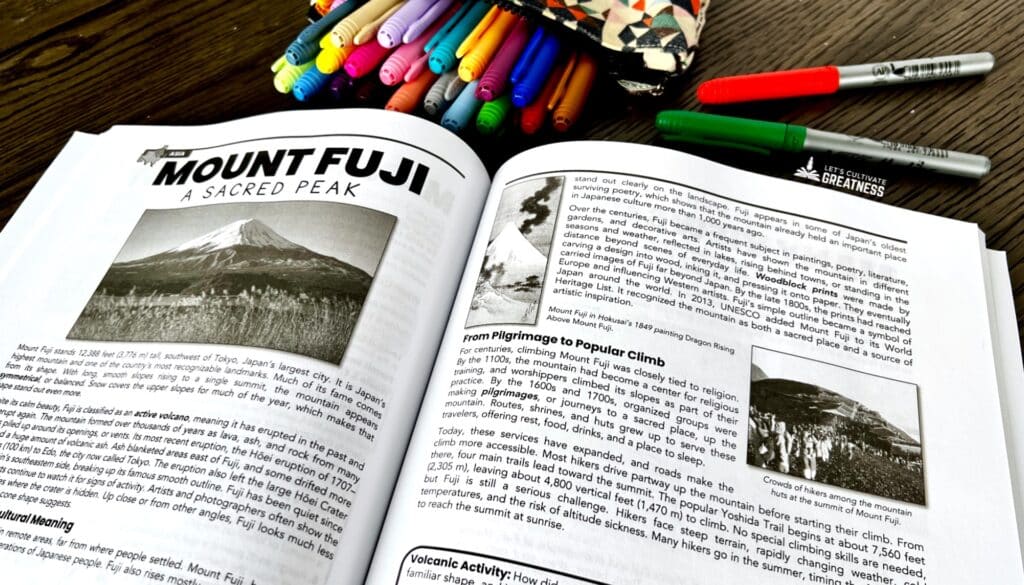
A Look Inside Natural Wonders of the World
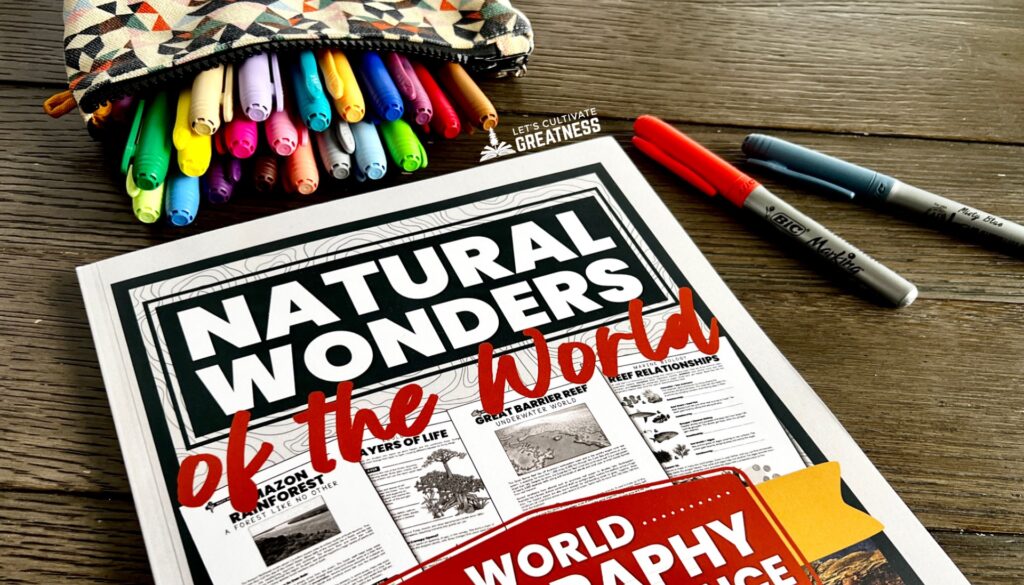
I wrote Natural Wonders of the World to give you a ready-made starting point for 20 possible unit studies, one for each wonder. It takes your middle schooler to some of the most awe-inspiring places on Earth, from the Grand Canyon and the Galápagos to Mount Fuji and the Outback.
Each wonder includes: a high-interest reading and map, photos, key vocabulary, critical-thinking questions, and extension activities connecting it to earth science, biology, human geography, history, or art
The extension pages are my favorite part. Your child will map how canyons form layer by layer, learn traditional stories explaining the Northern Lights, and decide how to manage the crowds on Everest.
At the end, they pick a natural wonder that isn’t in the book and research it on their own. It’s a great way to wrap up your year!
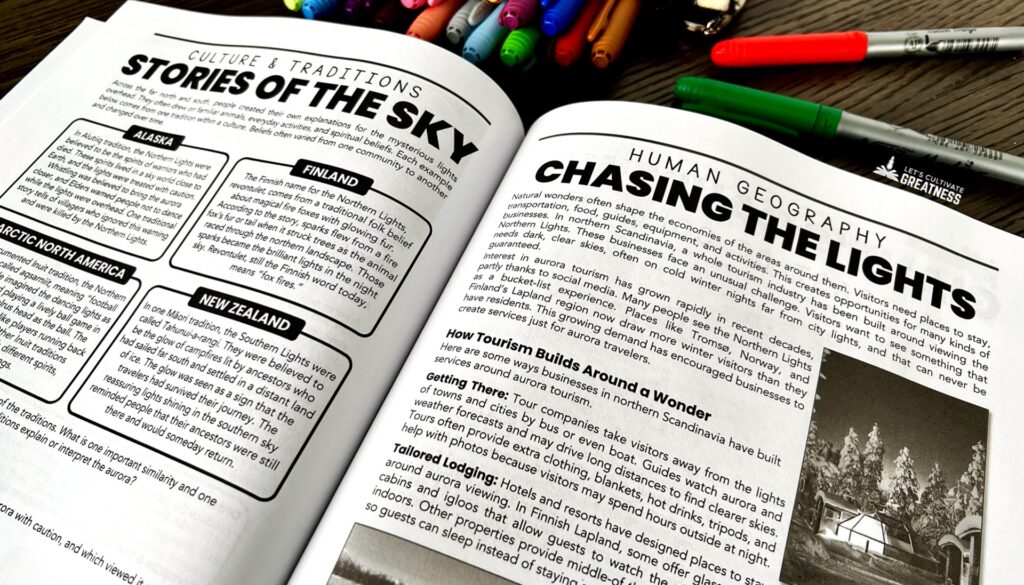
Use it to launch a year of unit study learning, or alongside a more traditional world geography or earth science curriculum. This workbook is part of my World Geography Workbook Series.
To see more inside the book, check out my flip-through video:
You can purchase Natural Wonders of the World here.