
We often think that learning the 50 states and capitals, state facts, or how to read a map, in fourth or fifth grade, is all students need to know about U.S. geography. And we falsely assume they’ll remember it all for the rest of their lives.
But most don’t. That’s why it is so important to revisit these topics intentionally in middle school and again in high school, either as a focus or alongside U.S. history or other social studies coursework.
In this post, I’m sharing the secular U.S. geography curriculum resources I’ve created for this exact purpose. I designed them to work both as a first-time introduction to topics like the 50 states and capitals and as a refresher for older students.
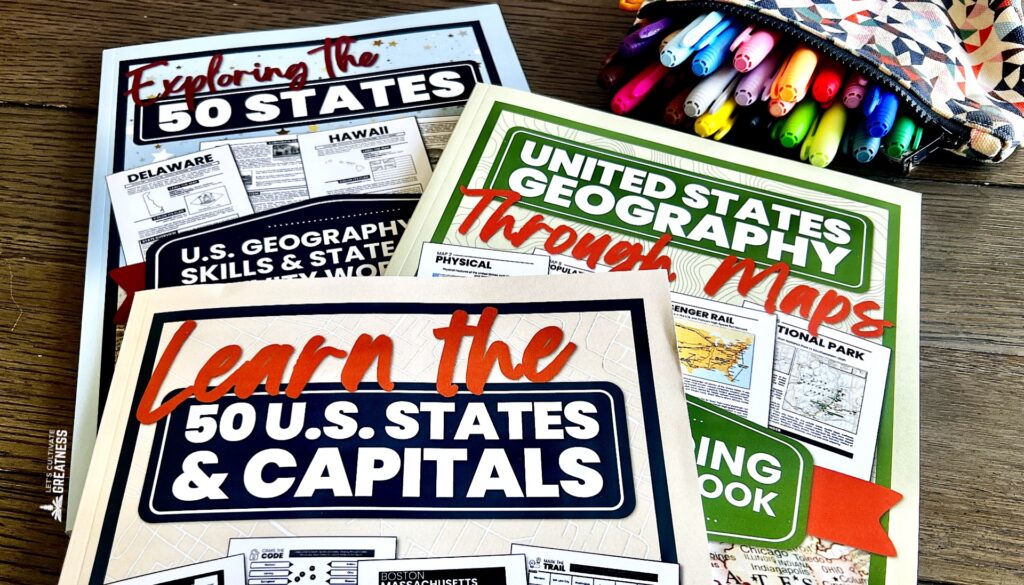
The three books in this U.S. geography workbook series are designed to work together or on their own, depending on what your student needs.
Why Teaching US Geography Can Be a Struggle
A lot of U.S. geography instruction still leans heavily on memorization—flash cards, alphabet songs, and lists of states and capitals. Sure, kids can remember them for a test, but if that’s all you do, that information will be forgotten as fast as it was learned.
I’ve also noticed a lot of U.S. geography materials focusing on coloring in state birds or trees. Coloring has its place, sure, but it isn’t often used to build thinking skills or meaningful connections. And no way does an older student want to do something that’s for little kids.
U.S. geography also isn’t a learn-it-once subject. Like any content area, it works best when it’s taught intentionally and revisited over time. Grouping states by region, exploring maps, and connecting places to their culture, history, or economy help students build a clearer mental picture of the country—and make the learning more likely to stick as they move into middle and high school.
Try These Effective U.S. Geography Curriculum Resources
When homeschool families or classroom teachers are looking for U.S. geography curriculum resources for their older learners, these are the ones I recommend the most. I designed this U.S. geography workbook series as a flexible way to cover core content without busywork, and to be appropriate and engaging for middle and high school students.
Each workbook focuses on a different aspect of U.S. geography. They work well together as a flexible geography study, but they can also be used on their own depending on where your student needs the most support. I’ve listed them here in the order they would most likely be used.
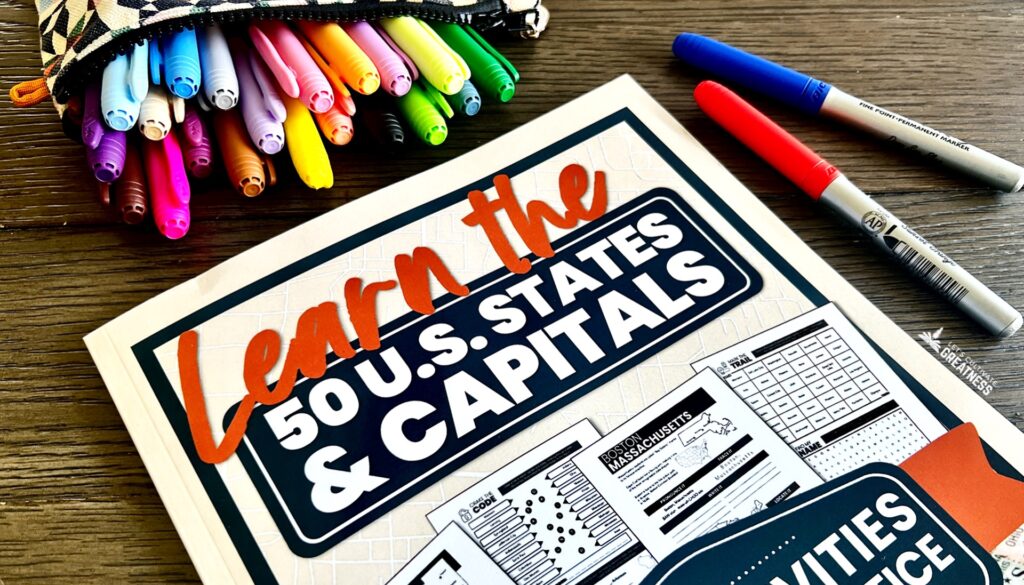
This workbook focuses on mastering the 50 states, capitals, and major cities. Instead of relying solely on rote memorization, it uses map-based activities, spelling and pronunciation practice, mnemonic devices, and review games to help information stick.
You can learn more about these strategies and why they work so well here: How to Teach the 50 U.S. States and Capitals Beyond Rote Memorization.
This book works well for upper elementary students learning the states for the first time and for middle or high school students who need a structured refresher. Built-in quizzes and review sections make it easy to check understanding along the way.
Suggested pacing: The book breaks the states into sets of 10, making it good for a set-a-week routine, or every two weeks for a slower pace.
United States Geography Through Maps
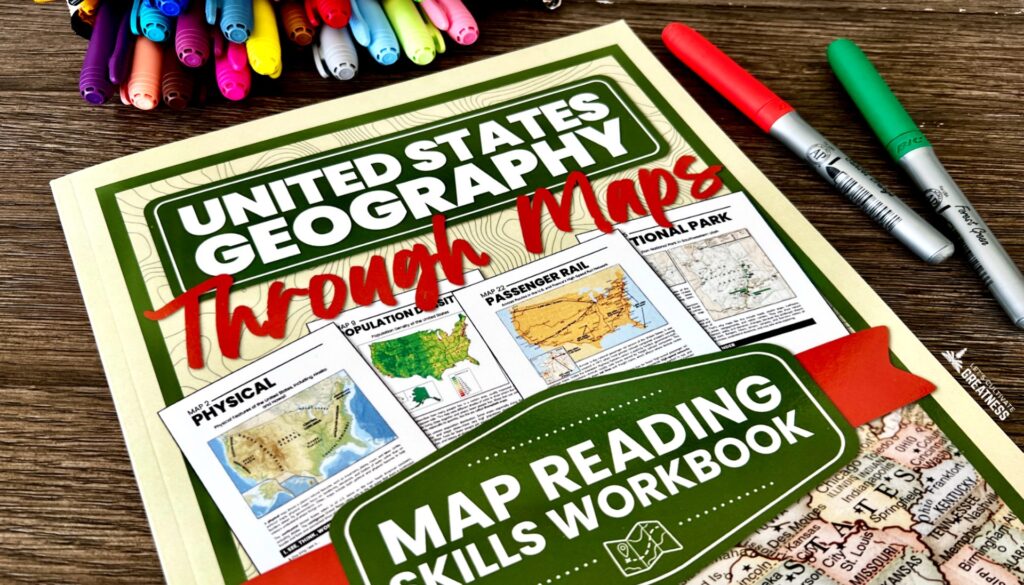
This workbook focuses on building map-reading and analysis skills. Students examine a wide range of maps—including physical, political, economic, and demographic maps—to practice interpreting information and thinking critically about what maps show.
Designed for upper middle and high school students, this book helps bridge geography with history, civics, and economics by strengthening transferable social studies skills.
There’s a lot that goes into analyzing maps critically—learn my favorite tips for teaching these skills here: Best Tips for Teaching Map-Reading Skills in Middle & High School.
Suggested Pacing: This workbook includes 36 maps, each with 5 activities, making it well-suited to a map-a-week pacing for a typical school year. It also works especially well alongside U.S. History coursework.
Why These Workbooks Work Well for Middle & High School Students
One thing I’m always mindful of when creating resources for older students is how they feel to use. These workbooks have a clean, straightforward design—no cutesy clip art or “just for fun” activities—so middle and high school students don’t feel like they’re doing elementary work. That alone makes a big difference in buy-in.
Every activity also has a clear purpose tied to social studies skills. Lists of these skills are included at the beginning of each book. Homeschool parents have told me how helpful these are.
Whether it’s labeling maps, analyzing patterns, or reading about a state’s geography or economy, the goal is always to build understanding or practice a real skill. That’s especially important for older students, who are quick to disengage if something feels pointless.
These workbooks work alongside a U.S. history course. Geography gives students the context they need to better understand historical events, regions, and movements. Used as a supplement, these U.S. geography curriculum resources help reinforce location, map skills, and regional understanding without adding extra stress or prep.
What Else Homeschoolers & Teachers Love About These Workbooks
One main reason homeschoolers and teachers like these workbooks is that they’re truly open-and-go. Everything you need is included—lists of skills practiced, quizzes, answer keys, glossaries, and clear directions. That makes it easy to slide these essential geography topics into your existing routines.
All three books include optional extension activity ideas if you have the time and want to dive deeper.
To take a look at each of these books, check out my flip-through video below.
They also work well in a progression: learning the 50 states in one year, then learning about each state the next, and, lastly, learning about the whole U.S. by analyzing maps. Doing this helps students build a stronger understanding over time.
All this flexibility is intentional, so families and teachers can adapt this U.S. geography workbook series to their own schedule and needs.
You can grab all three in this U.S. Geography Workbook Series here.